How to Clean Dentures So They Last Longer
Clean dentures by rinsing them after meals, brushing them every day with a denture-safe cleanser, and soaking them as directed when they are out of your mouth. The aim is to remove food, plaque, and odor without scratching the surface, bending clasps, drying the appliance, or changing the fit.
Denture-care snapshot
- Rinse removable dentures after meals whenever you can.
- Brush the denture daily with a soft brush and nonabrasive denture cleanser.
- Clean your gums, tongue, palate, and any remaining teeth separately.
- Keep most dentures moist overnight unless your dentist gives different instructions.
- Call your dental office if the denture becomes loose, cracked, painful, or suddenly hard to wear.
Set up a safe cleaning space before you start
Dentures are strong enough for chewing, but they can still crack if they hit a hard sink or tile floor. Before cleaning, place a folded towel on the counter or fill the sink with a few inches of cool or lukewarm water. This simple habit gives the denture a softer landing if it slips out of your hand.
Gather a soft denture brush or soft toothbrush, a denture cleanser, a covered soaking container, and clean water for rinsing. The American Dental Association's denture care guidance notes that dentures should stay in water or a denture-cleanser solution when not worn so they do not dry out or lose shape. The Mayo Clinic also advises avoiding hot or boiling water because heat can warp denture materials.
Do not assume regular toothpaste is the safest scrub. Many toothpastes are made for enamel, not acrylic or other denture materials, and can be too abrasive. Bleach, household cleaners, and stiff brushes can damage the base, dull the teeth, or weaken metal parts on partial dentures.
A daily routine that protects the fit
1. Remove and rinse after eating. Hold the denture over the padded sink and rinse away loose food. If you use adhesive, gently clear adhesive from the grooves that sit against your gums.
2. Clean your mouth before cleaning the appliance. Use a soft toothbrush on natural teeth. Use gauze or a soft brush on the tongue, cheeks, roof of the mouth, and gum ridges. A clean mouth helps reduce odor and irritation under the denture.
3. Brush the denture once a day. Apply denture cleanser to the brush, then clean every surface with light pressure. Pay special attention to the underside, clasps, and areas that touch the gums. Brushing harder is not better; steady, gentle brushing is safer.
4. Soak as directed. Most removable dentures need moisture when they are not being worn. Use water or a recommended soaking solution, and follow the product instructions. If you are unsure because your denture has metal attachments, ask your dentist which solution is safe.
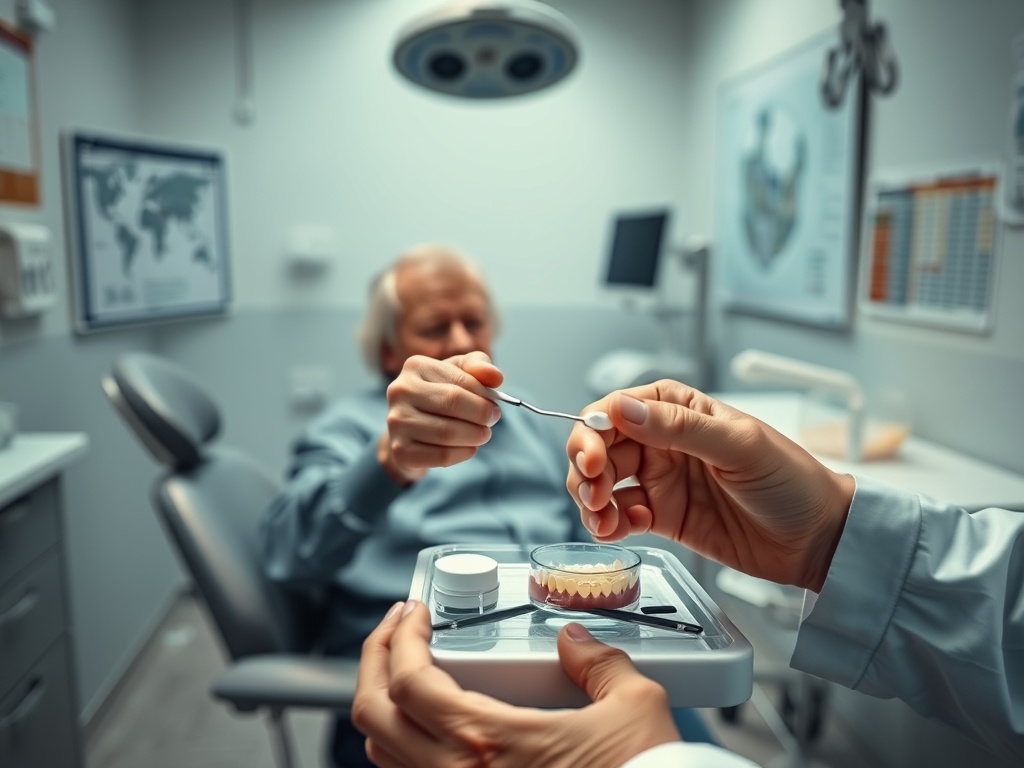
5. Rinse before putting it back in. Soaking solutions are not meant to be swallowed or left on the denture. Rinse thoroughly with clean water before wearing it again.
6. Inspect while you clean. Look for cracks, rough edges, missing teeth, loosened clasps, and new pressure spots. A small defect can become a larger fracture if ignored.
7. Store it out of reach. Keep dentures away from pets, young children, and tissues or napkins that could be thrown away by mistake.
If your denture care is part of a broader home-care routine, the right accessories matter. Our guide to home care tools for gum disease and gum recession explains where soft brushes, interdental tools, and water flossers fit for people who still have natural teeth or implants.
Cleaning mistakes that shorten denture life
| Mistake | Why it can cause trouble | Safer habit |
|---|---|---|
| Soaking in hot water | Heat can warp the base and change the fit | Use cool or lukewarm water unless told otherwise |
| Scrubbing with whitening toothpaste | Abrasives can scratch denture teeth and base material | Use a denture cleanser and soft brush |
| Using bleach on a partial denture | Bleach can discolor or weaken parts and damage metal | Ask which soak is safe for your specific appliance |
| Sleeping in dentures without guidance | Constant wear can irritate tissues in some patients | Ask whether overnight wear is appropriate for you |
| Fixing cracks with glue | Household glue is unsafe in the mouth and can ruin the fit | Keep the denture out and call the dental office |
| Using extra adhesive to solve looseness | Adhesive cannot correct a poor fit | Ask whether a reline, adjustment, or replacement is needed |
Home Care and Follow-Up for How to Clean Dentures So They Last Longer
Book a routine appointment if your denture rubs, clicks, traps food more than usual, causes sore spots, or needs more adhesive than it used to. These changes may mean the denture no longer matches the shape of your gums, not that you are cleaning poorly. A dentist may adjust the surface, recommend a reline, evaluate your bite, or check the health of the tissues underneath.
Seek urgent care sooner if the denture breaks and leaves a sharp edge, you have swelling, uncontrolled bleeding, a spreading sore, fever, or pain that makes it difficult to eat or speak. If you ever need a same-day visit, keeping a small kit ready can help; see our checklist on what to pack for an emergency dental visit.
Caregivers should also watch for hidden problems. A person with memory changes, arthritis, dry mouth, or reduced vision may not notice buildup or a sore under the denture. In those cases, a labeled soaking cup, a written routine, and scheduled dental checks are often more reliable than reminders alone.
If you recently lost weight, had teeth extracted, changed medications, or started treatment for dry mouth, mention it at the denture check. Small changes in saliva, gum shape, and bite can alter comfort before the denture looks visibly damaged.
Keep the appliance and your mouth on the same schedule
Denture cleaning works best when it is consistent, gentle, and matched to the material in your appliance. Bring your denture to routine dental visits, even if it feels comfortable, so the fit, bite, and oral tissues can be checked together. The next useful step is to ask your dentist or hygienist to watch your cleaning technique and point out any areas you may be missing.
Questions About Clean Dentures So They Last Longer
For Clean Dentures So They Last Longer, this part of Questions About Clean Dentures So They Last Longer focuses on the symptom history, previous treatment, current medicines, and the result the patient values most before consent is finalized, with the same details verified while the options are being narrowed. The clinician should also explain which examination finding supports each recommendation and what information could change it for Clean Dentures So They Last Longer before treatment is scheduled, using the examination and health history rather than a general assumption. Recording that explanation gives the patient a clearer next step for Clean Dentures So They Last Longer before consent is finalized, especially when follow-up duties are reviewed while the options are being narrowed.
Home Care and Follow-Up for How to Clean Dentures So They Last Longer During Initial Planning
For Clean Dentures So They Last Longer, this part of Home Care and Follow-Up for How to Clean Dentures So focuses on safe cleaning tools, foods, products, and daily techniques when the follow-up plan is written, with the same details verified while the options are being narrowed. The clinician should also explain which changes are expected and which should prompt an earlier call for Clean Dentures So They Last Longer as the long-term result is reviewed, using the examination and health history rather than a general assumption.
Home Care and Follow-Up for How to Clean Dentures So They Last Longer Before Treatment
For Clean Dentures So They Last Longer, this part of Home Care and Follow-Up for How to Clean Dentures So focuses on safe cleaning tools, foods, products, and daily techniques while cost and timing are compared, with the same details verified while the options are being narrowed. The clinician should also explain which changes are expected and which should prompt an earlier call for Clean Dentures So They Last Longer while comfort and function are assessed, using the examination and health history rather than a general assumption.