Best Home Care Tools for Gum Disease and Gum Recession
The best home care tools for gum disease and gum recession are the ones that remove plaque gently in the spaces you actually have: a soft toothbrush or powered brush, an interdental cleaner that fits between your teeth, and any rinse or device your dental team recommends for your risk level. Tools can support gum health, but they cannot replace diagnosis, scaling and root planing, periodontal maintenance, or treatment for active infection.
Gum-care tool shortlist
- Choose soft bristles, not hard scrubbing.
- Match interdental tools to the space: floss for tight contacts, interdental brushes for wider spaces, and water flossers when access or dexterity is difficult.
- Use fluoride toothpaste unless your dentist suggests a different product.
- Track bleeding, tenderness, recession changes, and sensitivity instead of guessing.
- Schedule care if bleeding continues, teeth loosen, gums swell, or recession is progressing.
Start with what the tool is supposed to do
Gum disease is not just "dirty teeth." It involves inflammation and infection of the tissues that support the teeth. The CDC explains that gingivitis can often be reversed with good self-care and professional cleaning, while periodontitis involves bone loss and needs professional management to slow progression. That difference matters when choosing home tools.
Gum recession is also not one single problem. It may be linked to past periodontal disease, thin tissue, tooth position, aggressive brushing, grinding, orthodontic history, or restorations near the gumline. A home-care device can help control plaque around exposed roots, but it cannot move gum tissue back on its own.
For that reason, think of tools in three jobs: brushing along the gumline, cleaning between teeth, and making the routine repeatable. If a product does not improve one of those jobs, it may be clutter rather than care.
Brush choices: manual, powered, and pressure-aware
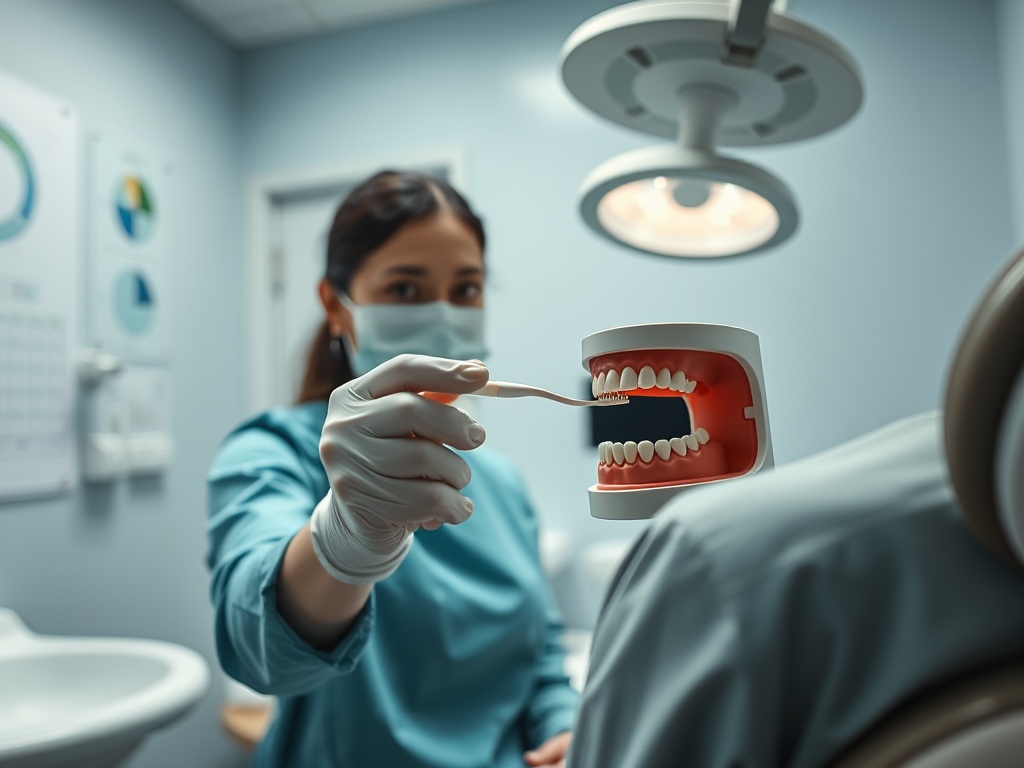
A soft manual toothbrush can work well when the technique is gentle and thorough. Hold the bristles toward the gumline, use small movements, and avoid sawing back and forth. If you see notches near the gumline or your gums feel scraped, the problem may be force, not motivation.
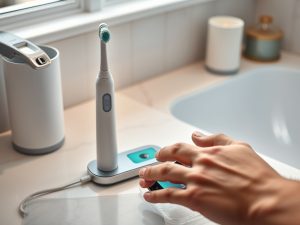
A powered toothbrush can help people who rush, brush unevenly, have limited dexterity, or benefit from a built-in timer. The ADA's toothbrush overview says both manual and powered toothbrushes can be effective, and that soft bristles and two minutes of brushing twice daily are the consensus recommendations. For recession-prone areas, a pressure sensor can be useful because it reminds you to lighten up.
If you wear a removable appliance, bridge, implant-supported restoration, or retainer, your routine may need extra steps. The article on cleaning dentures so they last longer is a useful companion if plaque control also involves an appliance outside the mouth.
Choosing between floss, brushes, picks, and water flossers
| Tool | Best fit | Limits to know | Ask your dental team about |
|---|---|---|---|
| String floss or tape | Tight contacts where a brush will not pass | Technique-sensitive and harder with limited dexterity | How to curve it around the tooth without snapping into the gums |
| Interdental brushes | Open spaces, recession triangles, some bridge or implant areas | Wrong size can injure tissue or bend wire | Which size fits each area and when to replace it |
| Soft picks | Travel, mild open spaces, habit-building | May not clean as thoroughly as a correctly sized brush | Whether they are enough for your pocket depths |
| Water flosser | Braces, bridges, dexterity challenges, dislike of floss | Does not always remove sticky plaque by itself | Pressure setting, tip style, and whether to pair it with another tool |
The ADA review of floss and interdental cleaners emphasizes that toothbrush bristles alone do not clean effectively between tight spaces. A Cochrane review of interdental cleaning devices found evidence that interdental brushes may reduce gingivitis and plaque in the short term when added to brushing, but the overall certainty varied by device and outcome. In plain English, the best device is the one that fits your mouth, is safe for your tissues, and gets used consistently.
Tools that help you compare, prepare, and verify
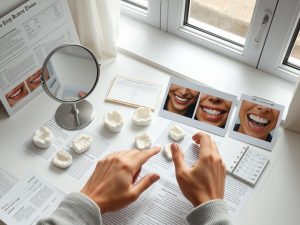
A small mouth mirror and a bathroom light can help you see bleeding points, trapped food, or areas you skip. A two-week bleeding log can make patterns clearer before a periodontal visit. Write down which sites bleed, what tool you used, and whether tenderness improved.
Disclosing tablets can show plaque you missed, but they should be used as feedback, not as a reason to scrub harder. People with recession often need gentler technique, not more pressure. If the stain remains in one area after several attempts, ask a hygienist to demonstrate a safer angle.
For people with severe recession sensitivity, a dentist may recommend a desensitizing toothpaste, fluoride varnish, prescription fluoride, bonding, gum graft consultation, or bite guard. Home tools help control the environment; they do not decide which treatment is appropriate.
Also ask how often each tool should be replaced. Bent interdental wires, frayed brush heads, and worn water-flosser tips can turn a good idea into an irritating one.
Red flags that should not be handled by gadgets
Book a dental or periodontal evaluation if your gums bleed most days, pus appears near a tooth, teeth feel loose, your bite changes, chewing hurts, gums are rapidly receding, or sensitivity suddenly spikes in one area. Seek urgent care if swelling spreads, fever develops, pain becomes severe, or you cannot open your mouth normally.
If pain or swelling leads to a same-day appointment, use the practical checklist for packing for an emergency dental visit so you bring medications, prior records, insurance details, and symptom notes. If your dentist recommends a crown after decay or fracture is controlled, the comparison of same-day crowns and traditional crowns can help you understand the workflow without turning tool shopping into treatment planning.
Build a routine your gums can tolerate
Choose one brushing method, one interdental method, and one tracking habit before adding more products. Use them gently for several weeks, then ask your dental team what improved and what still needs professional care. The right home-care setup should make your gums calmer, your technique easier, and your next dental conversation more specific.
Questions About Best Home Care Tools Gum Disease Gum Recession
For Best Home Care Tools Gum Disease Gum Recession, this part of Questions About Best Home Care Tools Gum Disease Gum Recession focuses on the symptom history, previous treatment, current medicines, and the result the patient values most after the examination is explained, with the same details verified while the options are being narrowed.
Home Care and Follow-Up for Best Home Care Tools for Gum Disease and Gum Recession During Initial Planning
For Best Home Care Tools Gum Disease Gum Recession, this part of Home Care and Follow-Up for Best Home Care Tools for focuses on safe cleaning tools, foods, products, and daily techniques when a second opinion is considered, with the same details verified while the options are being narrowed.
Home Care and Follow-Up for Best Home Care Tools for Gum Disease and Gum Recession Before Treatment
For Best Home Care Tools Gum Disease Gum Recession, this part of Home Care and Follow-Up for Best Home Care Tools for focuses on safe cleaning tools, foods, products, and daily techniques before temporary care is replaced, with the same details verified while the options are being narrowed. The clinician should also explain which changes are expected and which should prompt an earlier call for Best Home Care Tools Gum Disease Gum Recession as the treatment sequence is documented, using the examination and health history rather than a general assumption.
Home Care and Follow-Up for Best Home Care Tools for Gum Disease and Gum Recession
When considering Best Home Care Tools for Gum Disease and Gum Recession, ask how smoking, medicines, grinding, hygiene, or earlier dental work could change predictability. Before proceeding with Best Home Care Tools for Gum Disease and Gum Recession, identify the factor that would make the dentist postpone care or recommend another approach as the treatment sequence is documented. Suitability for Best Home Care Tools for Gum Disease and Gum Recession depends on the diagnosis, tissue health, medical history, goals, and ability to maintain the result.