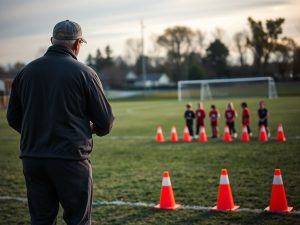
Practice transfers best when drills move from clean technique to variable, pressured, game-like decisions.
TL;DR: Practice transfers best when drills move from clean technique to variable, pressured, game-like decisions.
Why Practice Often Falls Apart Under Pressure
Transferring practice skills into real match performance means taking something you can do in a controlled drill and using it when timing, pressure, opponents, fatigue, and score context are all changing. The gap appears most often when practice is too clean and competition is messy.
A player may hit accurate passes in a line drill but rush the same pass in a match. A tennis player may serve well alone but double fault when the score tightens. The skill is not fake; it has simply not been trained with enough decision pressure.
This is where planning matters. Athletes who understand why decision fatigue changes late-game choices can build practice sessions that include not only technique, but also mental load and recovery between decisions.
Build the Skill in Layers
A useful progression has four layers: technique, variable repetition, pressure, and match simulation. Technique gives the movement shape. Variable repetition changes speed, angle, target, or timing. Pressure adds scoring, consequences, or fatigue. Match simulation connects the skill to real choices.
For example, a basketball shooter may start with form shots, move to catch-and-shoot attempts from different spots, add a defender closing out, then finish with a small-sided game where the shot appears only after a pass, cut, or rebound. Each step asks the player to solve a more realistic problem.
Strength and conditioning resources from the NSCA and other professional groups emphasize that performance preparation should match the demands of the activity, not just repeat isolated movement.
Use Game-Like Constraints, Not Random Chaos
A constraint is a rule that shapes behavior. In soccer, a coach may limit touches to encourage scanning and passing. In volleyball, a server may need to hit a zone after sprinting from the sideline. In pickleball, a player may start each rally from a poor court position to practice recovery.
The key is to make the constraint specific. Random chaos does not teach much. A good constraint forces the athlete to read the same cue they will face in competition: defender position, ball speed, teammate movement, clock pressure, fatigue, or scoreboard risk.
When the cue improves, the drill is working. When the athlete only learns how to beat the drill, the drill needs adjustment. Coaches should watch whether decisions improve, not only whether the final shot, pass, or swing succeeds.
| Practice Layer | What It Builds | Example |
|---|---|---|
| Technique | Clean movement pattern | Slow reps with feedback |
| Variable repetition | Adaptability | Different angles, speeds, targets |
| Pressure | Emotional control | Score-based drill with consequence |
| Match simulation | Decision transfer | Small-sided game with real cues |
Measure Transfer With Simple Evidence
The best measurement is not always a statistic. Coaches and players can track whether the skill appears in real play more often, whether it appears earlier in possessions, and whether mistakes become less harmful. Video clips, notes after games, and short reflection questions can reveal progress.
Ask three questions after each match: Did I recognize the cue? Did I choose the right action? Did my body execute it under the available time? A 'no' to the first question calls for perception work. A 'no' to the second calls for tactical decision-making. A 'no' to the third calls for more technical repetition under pressure.
Players who spend long hours sitting should also consider movement quality. Poor mobility can make skill transfer harder, which is why posture and desk-time habits matter even for athletes who practice regularly.
Common Coaching Cues That Help
Use cues that point attention outward. 'See the defender's hips' is usually more useful than 'move your feet faster.' 'Hit through the back of the ball toward the target' is often clearer than a long speech about mechanics. Short, repeatable cues survive pressure better than complex instructions.
Limit corrections during live play. If the athlete stops every few seconds, the drill becomes a lecture. Instead, let a short game run, take one note, then correct one priority at the break. Practice must include enough uninterrupted action for the athlete to connect perception and movement.
Finally, rehearse the emotional moment. Add noise, score, time limits, tired legs, or a teammate waiting for a pass. Real performance improves when the athlete has already felt a smaller version of the pressure before match day.
Turning Practice Into a Weekly Routine
A strong weekly rhythm includes one technical session, one variable session, one pressure session, and one reflection point after competition. Beginners may combine these into a single practice, while advanced players may separate them across the week.
The goal is not to make every practice look like a match. The goal is to make sure every important skill eventually returns to match-like conditions. When training includes perception, pressure, and feedback, real performance becomes less surprising.
Choose one skill this week, define the game cue that triggers it, and build a four-layer progression around that cue. Then judge success by whether the skill appears when the match actually asks for it.
A Sample 30-Minute Transfer Block
Start with five minutes of clean technical reps to remind the body what quality feels like. Move into ten minutes of variable reps where the angle, target, or timing changes every few attempts. Add ten minutes of pressure with a score, defender, or time limit.
Use the final five minutes for reflection. The athlete should name the cue they saw, the choice they made, and what they would change next time. This short review turns the drill from activity into learning.
Keep the block narrow. One skill, one cue, and one performance question are enough. The fastest way to weaken transfer is to overload the athlete with five corrections and no chance to test them.
What to Review After the Next Match
After the next match, choose two clips or two remembered moments: one where the practiced skill appeared and one where it failed to appear. Write down the cue, the choice, the execution, and the result. This keeps the review specific instead of turning it into a general judgment about confidence.
If the cue was never recognized, practice should slow down and emphasize scanning. If the cue was recognized but the choice was poor, add decision games. If the choice was good but execution failed, return to technique under moderate pressure. That diagnosis keeps training honest.