The best four-season landscape plants earn their place more than once a year: they may flower in spring, provide summer structure, develop fall color or fruit, and still contribute bark, stems, seed heads, or evergreen form in winter. The right choice depends on your climate, mature space, soil, light, and how much maintenance you are willing to do.
Quick Take
- Build around a few structural plants rather than chasing nonstop bloom.
- Use a mix of evergreen form, woody bark, berries or seed heads, and changing foliage.
- Choose by mature size and site conditions first, then by seasonal display.
What “Four-Season Interest” Really Means
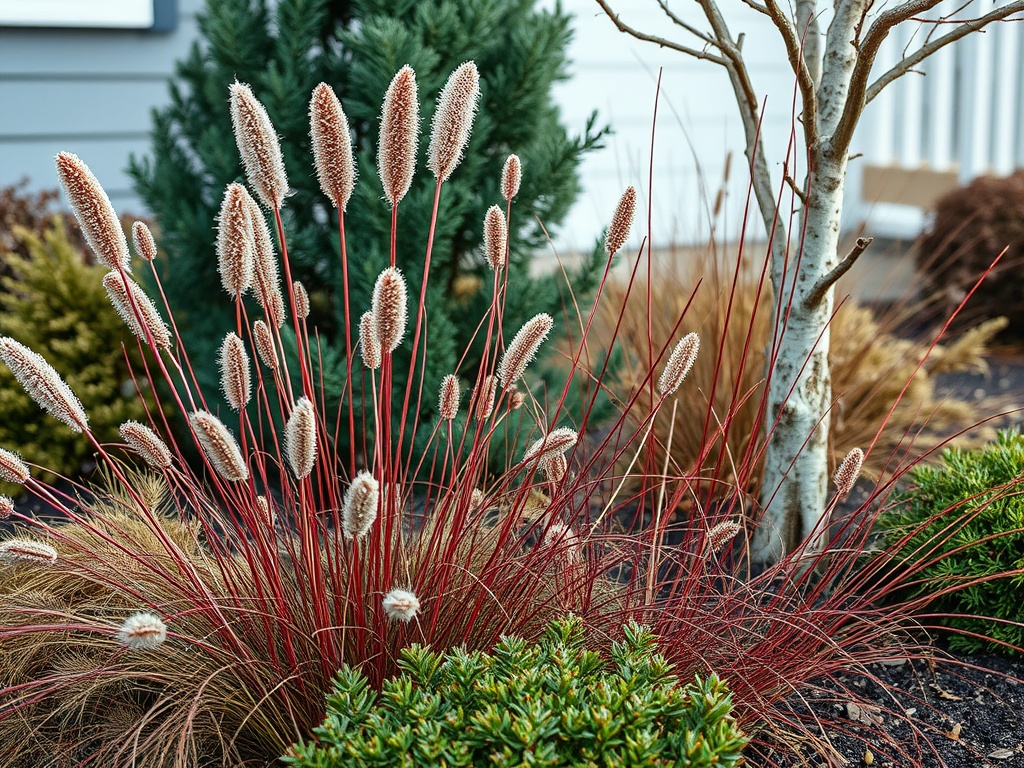
Four-season interest does not mean every plant looks dramatic in every month. It means the overall planting keeps giving you something to look at as conditions change. A deciduous shrub can be valuable in winter if it has colorful stems or persistent fruit. An ornamental grass may look plain in spring yet carry texture and movement through late fall. Evergreens provide reliable structure, but a yard made only of evergreens can feel visually flat. The strongest plan combines different kinds of interest so one plant takes over as another quiets down.
That approach is consistent with Illinois Extension guidance on winter-interest plants, which highlights bark, stems, seed heads, texture, color, and movement as useful cold-season features. This is a general design principle rather than a promise that a particular species will perform the same way everywhere. Hardiness, heat, rainfall, soil drainage, deer pressure, and local pests can all change the result.
The Plant Types That Do the Most Work
| Plant type | Best contribution | Good fit when | Main trade-off |
|---|---|---|---|
| Evergreen shrubs or conifers | Year-round mass and screening | You need winter structure or a visual anchor | Can become oversized if mature dimensions are ignored |
| Deciduous shrubs with colorful stems | Winter color plus seasonal foliage | Winter is visually bare in your yard | Some need periodic renewal pruning |
| Flowering or fruiting small trees | Spring bloom, summer canopy, fall color or fruit | You have room for a long-term focal point | Placement matters because roots and canopy expand |
| Ornamental grasses | Texture, movement, seed heads | You want a softer transition between shrubs and perennials | Usually cut back once a year |
| Long-lived perennials | Flowers, foliage, seed heads | You want flexible layers and lower upfront cost | Many disappear or shrink substantially in winter |
A practical shortlist should start with plant function, not a shopping cart. If your main problem is a blank winter view, an evergreen or shrub with distinctive bark may be more useful than another summer-flowering perennial. If your yard already has plenty of winter mass, a small tree with spring flowers and fall color may add more seasonal contrast. Penn State notes that shrub dogwoods can provide four-season interest through flowers, fruit, foliage, and colorful bark, illustrating why woody plants with multiple traits can be efficient choices.
Four Reliable Design Roles to Fill
1. The structural anchor
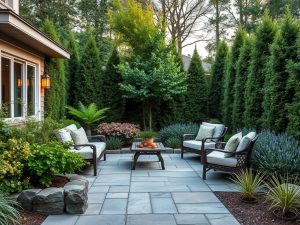
Choose one or more plants that still define the bed when leaves and flowers are gone. Compact conifers, broadleaf evergreens, or a well-branched small tree can do this job. The goal is not to fill every foot with permanent greenery. It is to keep enough visible mass that the landscape still has shape in January. Place anchors where they frame an entry, corner, patio edge, or long view rather than scattering them randomly.
2. The seasonal transformer
These are plants that noticeably change through the year: spring flowers followed by summer leaves, then strong autumn color, fruit, bark, or seed heads. Serviceberries, viburnums, dogwoods, native grasses, and many regionally appropriate shrubs can fit this role, but the species should be chosen for your local climate and site. A plant that struggles in heat, drought, poor drainage, or alkaline soil will not become a four-season asset simply because its catalog description sounds appealing.
3. The winter-detail plant
Winter interest often comes from close-range details: peeling bark, red or yellow stems, persistent berries, dried flower heads, or seed heads that catch low light. Put these plants where you actually see them during cold months, such as from a kitchen window, near the front walk, or beside a frequently used patio door. Leaving some sturdy perennial stems and grass seed heads standing can also extend visual interest, provided local cleanup needs or disease concerns do not call for earlier removal.
4. The ground-level connector
Low evergreens, sedges, groundcovers, and durable perennials help the design look connected instead of like isolated shrubs sitting in mulch. Their job is to soften edges and create repeated texture. Keep spreading behavior in mind. A vigorous groundcover can be useful in the right place but difficult to manage near delicate plants. Native or noninvasive choices suited to your region are generally easier to integrate into a long-term planting plan.
How to Choose Plants Without Buying the Wrong Thing
1. Check the USDA hardiness zone and local heat, moisture, and wind conditions, then confirm the plant is appropriate for your region.
2. Measure the actual planting area and compare it with the plant’s mature width and height, not its nursery-container size.
3. Match light and drainage. A beautiful shade shrub is still a poor choice for a hot, reflected-sun wall.
4. List the months when your yard currently feels empty, then choose plants that specifically improve those gaps.
5. Choose a small number of repeatable plants rather than one of everything. Repetition makes seasonal changes easier to read.
For a yard that also needs screening, the plant palette can overlap with the approach in layering plants around a patio for privacy. For winter turf preparation near those beds, winterizing the lawn before frost helps keep the surrounding ground plane tidy without treating lawn care as part of the ornamental planting itself.
A Simple Budget-Based Shortlist
On a smaller budget, prioritize one structural woody plant and fill around it with divisions, grasses, or regionally suitable perennials that can mature over time. At a midrange budget, add a second woody layer, such as a flowering shrub plus an evergreen anchor, and repeat those choices across the bed. With a larger budget, spend on mature structural plants, site preparation, and professional installation where needed rather than simply buying more species. Bigger specimens can create immediate presence, but they still need correct planting depth, watering, and space to establish.
Build the Yard Around Seasonal Hand-Offs
The most convincing four-season yard is not the one with the longest plant list. It is the one where interest passes from one layer to another: early flowers to summer foliage, foliage to fruit and fall color, then bark, evergreen mass, grasses, and seed heads through winter. Before buying, sketch the bed in winter form and ask what would still be visible. That simple test prevents a design that looks full in May and empty for the rest of the year.
Use plant lists as a starting point, then verify suitability with your local cooperative extension, nursery professionals, or a qualified landscape designer. Home and garden information here is educational and does not replace site-specific horticultural, structural, irrigation, or legal advice.
Next step: make a four-season inventory of your yard, identify the weakest season, and choose one plant role to fill before expanding the palette.