Luxury-resort personalization works best when technology helps staff understand a guest's current preferences without making the experience feel automated or intrusive. Connected guest profiles, messaging, room controls, service history, and preference data can improve consistency, but premium hospitality still depends on discretion, consent, and human judgment.
TL;DR
- Technology can help luxury resorts remember preferences and coordinate service across departments.
- Personalization should be based on current guest choices, not assumptions drawn from an old stay.
- Smart-room controls are useful when they remain intuitive and have manual alternatives.
- Privacy, cybersecurity, and staff access controls are part of the guest experience, not just back-office concerns.
A guest profile can connect the stay across departments
Luxury service often involves several teams: reservations, front desk, concierge, housekeeping, food and beverage, spa, transport, and recreation. A shared guest profile can reduce repetition when those teams need the same information. For example, a confirmed dietary requirement or preferred arrival time can be visible to the right staff without the guest explaining it at every touchpoint.
Modern hotel PMS platforms are designed to centralize guest profiles, room inventory, payments, and operational information. Oracle's hotel property-management platform overview illustrates how mobile guest service and profile data can sit within the wider operating system. The value is coordination, not the software itself. A resort still needs policies about which staff can see which information.
Good personalization starts with permission
There is a difference between remembering a preference and making an assumption. If a guest requested a particular pillow on a previous trip, offering that option again may be helpful. Automatically setting the room based on an old preference without a way to change it can be less useful, especially if the new trip has a different purpose or includes different companions.
The best systems make preferences visible and editable. Pre-arrival questionnaires should be short, optional where appropriate, and clear about why information is being collected. Guests should not have to disclose unnecessary personal details to receive basic service. Personalization feels premium when it gives the guest more control, not when it creates a sense of being monitored.
Messaging can make concierge service more continuous
A messaging channel can let a guest ask for a restaurant time, transport update, housekeeping request, or activity change without returning to the lobby. For a luxury property spread across villas or a large resort campus, that convenience can matter. The important design feature is continuity: the staff member responding should have enough context to avoid asking the guest to repeat the entire request.
This is where integrated systems help. A messaging tool is more useful if it can connect a confirmed request to the reservation or relevant department. Travelers who want to understand activity coordination can also read the technology behind easier resort activity booking.
Smart rooms can personalize comfort, but simplicity matters
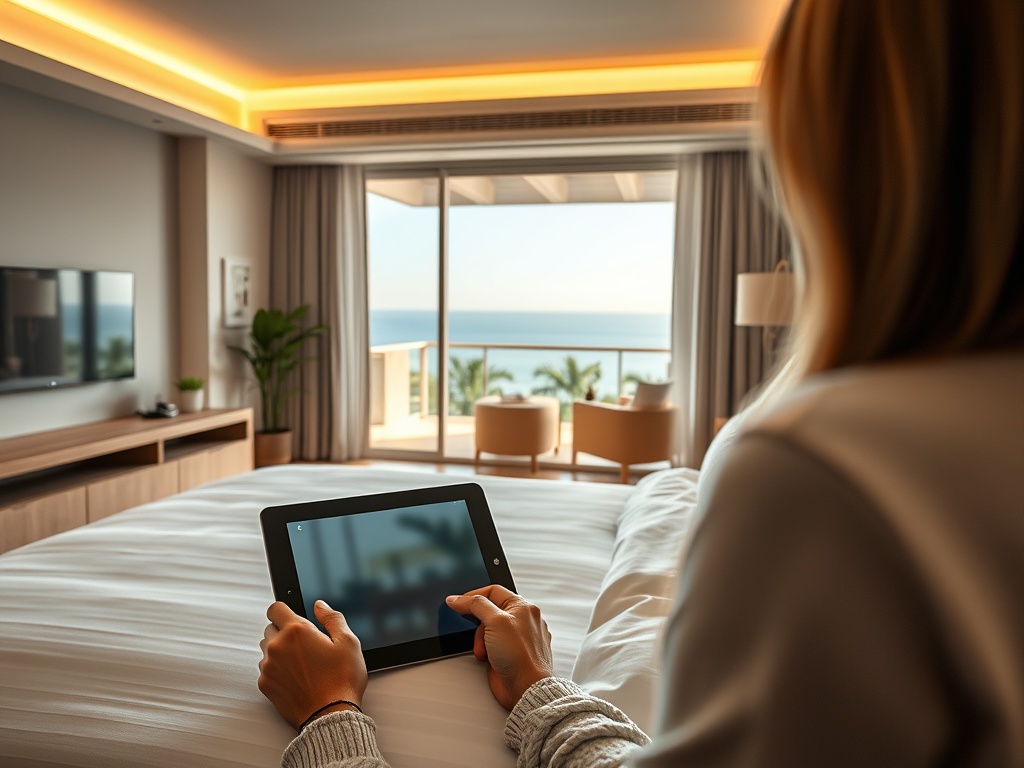
Luxury resorts may use digital controls for lighting, temperature, curtains, entertainment, or service requests. These features can support personalization when guests can quickly understand them. A room that requires a complicated tablet workflow for basic lighting can feel less luxurious than a room with clear physical controls.
The strongest design keeps essential functions intuitive and provides manual alternatives. Guests should not need to create an account or download an app to turn off a lamp. Accessibility should also be considered: controls should work for guests with different visual, mobility, or dexterity needs, and staff should be able to explain the system without technical jargon.
Personalized recommendations need context
A resort may use previous purchases, stated interests, or current itinerary data to suggest dining, wellness, or activities. The useful version of this is relevant and easy to decline. A guest traveling alone may appreciate a quiet restaurant recommendation, while the same guest on a family trip may need a completely different set of options.
Recommendations should also distinguish availability from prediction. If a system suggests a popular activity, the guest still needs current pricing, time, eligibility, and cancellation information before deciding. Related planning considerations are covered in how technology is improving tropical resort travel, where real-time coordination often matters more than a sophisticated recommendation engine.
Loyalty data can make recognition more consistent
Luxury brands often use loyalty profiles to recognize returning guests, but recognition should not become rigidity. A saved room preference, preferred contact method, or known service request can help staff prepare. Yet the current reservation should take priority over history. A guest may want privacy on one trip and more proactive service on another.
A useful practice is to confirm high-impact preferences before acting on them. This is especially true for dietary needs, allergies, accessibility requirements, or wellness-related information. Those details can be sensitive and should be treated differently from a simple preference such as newspaper delivery or pillow firmness.
Privacy and cybersecurity are part of premium service
The more a resort knows about a guest, the greater its responsibility to protect that information. Hotel systems may connect property management, payments, Wi-Fi, electronic locks, restaurants, and other services. NIST's guide to securing property-management systems describes controls such as role-based access, data protection, and monitoring in hospitality environments.
For a luxury resort, security is not separate from hospitality. A guest who receives a suspicious message about payment or discovers that too many employees can see sensitive profile notes may lose trust quickly. Resorts should minimize collection, restrict access, train staff, and remove information when there is no longer a legitimate need to retain it.
AI can assist staff, but should not impersonate judgment
AI tools can summarize guest requests, route messages, translate simple communications, or help staff search property information. These uses may improve response time. Problems appear when the system confidently invents an answer, fails to understand an exception, or gives a recommendation without showing the underlying availability or policy.
Luxury hospitality depends heavily on context. A delayed anniversary dinner, a medical dietary issue, a lost item, or an upset guest may require empathy and discretion that should remain with trained staff. AI is most useful as an assistant that reduces administrative work and hands complex situations to a person with the authority to solve them.
How travelers can evaluate tech-enabled personalization
Before booking, look for clear information about mobile check-in, messaging, digital room controls, and privacy practices. If you have a specific accessibility, dietary, or service requirement, contact the resort directly rather than assuming its personalization system will identify it. Ask how preferences can be updated and whether core services are available without an app.
During the stay, use the technology that genuinely makes the experience easier and ignore the rest. Luxury is not measured by the number of screens in the room. The best technology is quiet, optional, secure, and connected enough to help staff deliver consistent service while leaving the guest in control of how personal the stay becomes.