
A tropical resort stay can feel simple from the guest side, but the smoothest experiences increasingly depend on connected systems working behind the scenes. The most useful technology reduces planning friction, improves access to current information, and helps guests manage rooms, dining, activities, transfers, and safety without turning the trip into a screen-heavy exercise.
TL;DR
- Prioritize technology that removes a real travel problem, such as uncertain arrival timing, activity availability, room access, or weather awareness.
- Resort apps and cloud-based hotel systems can make service requests and itinerary changes easier when information stays synchronized.
- Digital tools are most valuable when they complement staff rather than replace human help at moments that require judgment.
- Travelers should still verify policies, connectivity, privacy settings, and offline options before relying on an app.
The biggest improvement is better coordination
Tropical resort trips often involve more moving parts than a standard city-hotel stay. Airport or ferry transfers, meal plans, beach conditions, spa appointments, excursions, and activity schedules can all affect the day. A well-designed digital system can put those details in one place and reduce the need to call several desks or keep multiple confirmation emails open. That coordination is especially useful when plans change because of weather, transport delays, or limited availability.
Hotel property-management platforms sit behind many of these interactions. Oracle describes modern cloud PMS platforms as systems that connect room inventory, guest profiles, payments, and mobile guest-service functions. That does not mean every resort offers the same features, but it shows why an apparently simple guest request may depend on several connected systems. Travelers who want to understand this layer can also read our guide to the technology behind easier resort activity booking.
Mobile check-in and digital access can reduce arrival friction
When a resort supports mobile pre-arrival forms, digital registration, or mobile room access, guests may spend less time repeating information at the front desk. The practical benefit is strongest when the system is optional, easy to understand, and backed by a staffed alternative. A digital check-in process that fails on a weak connection or asks guests to complete too many steps can create more friction than it removes.
Security matters because hotel systems often connect to payment platforms, door locks, Wi-Fi, and guest-service applications. NIST's hospitality cybersecurity guidance explains that property-management systems can be central hubs for sensitive guest and operational data. For travelers, the takeaway is straightforward: use official resort apps and links, keep device security current, and be cautious with unexpected messages requesting payment or login information.
Activity planning is becoming more responsive
A resort activity schedule used to be something guests checked on a board in the lobby. Many properties now use digital booking interfaces for snorkeling trips, kids' activities, fitness classes, cabanas, restaurant reservations, and spa times. The best systems show real availability, restrictions, duration, and cancellation terms before the guest confirms. That can help families and groups avoid conflicts and reduce time spent waiting for staff to check separate systems.
Technology does not guarantee accurate inventory. A useful guest habit is to treat the digital confirmation as the source of record, then save it somewhere accessible offline. If an activity is central to the trip, confirm the meeting point and cancellation policy in advance. Families coordinating several schedules may also find our article on smart tech tools for coordinating family resort stays helpful.
Better information can support safer beach decisions
Tropical travel technology is not only about convenience. Official weather, surf, and hazard information can be more important than a resort's promotional content. The U.S. National Weather Service advises beach visitors to check official forecasts and local conditions before entering the water, because dangerous currents and waves can exist even when the weather appears pleasant. Its beach-safety guidance is a useful example of why verified information should take priority over a generic weather icon.
A resort app can be useful if it surfaces local alerts, transport changes, or facility closures, but guests should know where that information comes from. Good design makes the source clear and provides a timestamp. For remote islands, offline access also matters. Saving the resort address, emergency contacts, transfer details, and a map before leaving reliable service is a simple backup that works even when the most sophisticated app does not.
Personalization is useful when guests control it
Technology can help a resort remember preferences such as pillow type, dietary notes, room location requests, or previous activity choices. Used well, that can reduce repetitive conversations and make service feel more consistent. Used poorly, it can feel intrusive or lead to assumptions that do not match the current trip. A family vacation, anniversary trip, and solo stay can have very different priorities even for the same guest.
The better approach is permission-based personalization. Guests should be able to correct preferences, decline optional tracking, and request human assistance. Resorts also need strong controls around guest data. If you are interested in how these systems can work in premium properties, see how luxury resorts use technology to personalize guest stays.
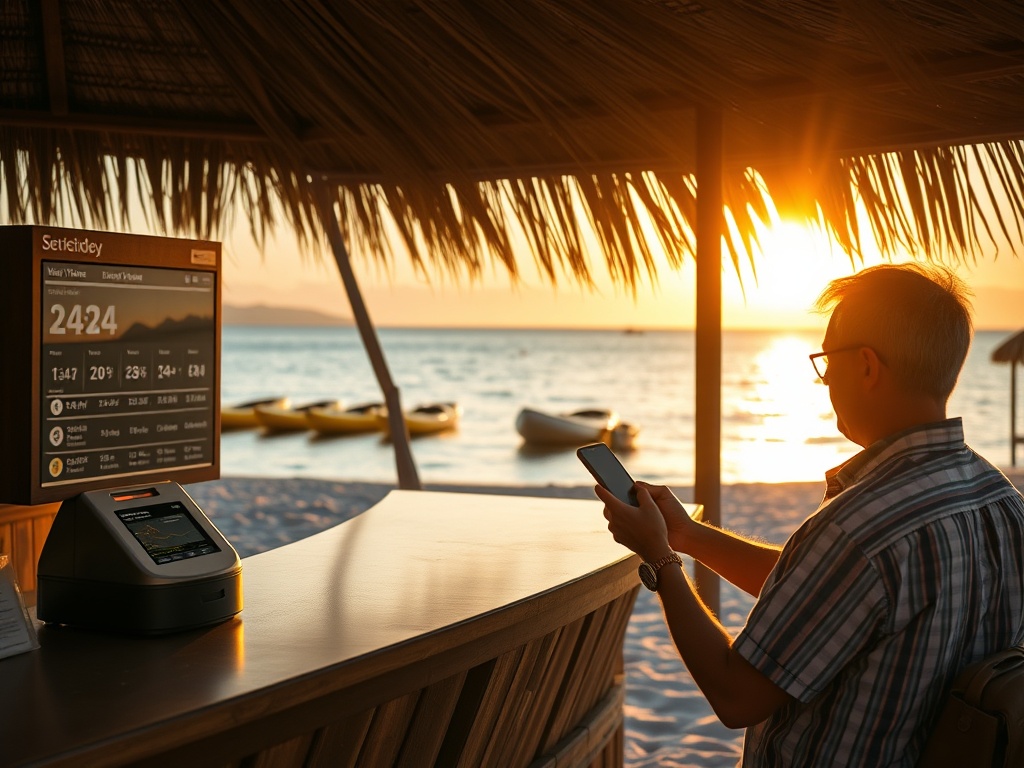
Technology should make the resort easier to use, not harder
A useful test is to ask what happens when the phone is unavailable. Can a guest still enter the room, ask for towels, book a table, or reach the transfer desk? The answer should usually be yes. Technology becomes a problem when a resort requires an app for routine services but offers poor Wi-Fi, complicated registration, or no alternative for guests who do not want to use a smartphone.
Travelers can evaluate a resort before booking by checking the official site for app requirements, mobile-key availability, messaging services, connectivity details, and activity-booking methods. Reviews may help identify patterns, but they should be treated as individual experiences rather than verified service guarantees. If a particular digital feature is essential, ask the resort directly because implementation can vary by property and room type.
How to separate useful innovation from gimmicks
Useful resort technology usually saves time, improves accuracy, increases access to current information, or gives guests more control. A live activity calendar is useful when it reflects actual availability. A mobile key is useful when there is a reliable fallback. A room-control tablet can be convenient when basic lighting and temperature controls remain intuitive. A chatbot can help with simple questions when it can hand off to a person for exceptions.
A gimmick often does the opposite. It adds steps without solving a guest problem, collects information without a clear benefit, or makes ordinary services dependent on a fragile interface. Travelers do not need to choose a resort because it advertises artificial intelligence, robotics, or smart-room features. The better question is how the technology changes the guest journey in a measurable, understandable way.
What to verify before booking
Before paying a deposit, check how the resort handles airport or ferry transfers, mobile check-in, digital room access, restaurant and activity reservations, and weather-related changes. Ask whether important confirmations are sent by email or can be saved offline. If you are traveling with older relatives, young children, or guests with accessibility needs, confirm that digital services have practical alternatives and do not create barriers.
Finally, look at the trip as a system rather than a collection of apps. The strongest technology disappears into the experience because it helps information move to the right person at the right time. Choose the tools that reduce uncertainty, keep a non-digital backup for essential details, and let the resort's staff handle the situations where empathy and judgment matter most.