The best at-home recovery tools are the ones that provide a useful, evidence-supported effect without distracting from sleep, nutrition, sensible programming, and medical care when needed. Foam rollers and simple massage tools can help with short-term soreness or range of motion; compression garments and cold exposure may help some recovery outcomes, while massage guns appear useful for mobility and comfort but have less consistent evidence for accelerating performance recovery.
TL;DR Buy tools for a specific problem, not for the promise of “faster recovery” in general. A foam roller or massage ball is a low-cost first choice for soreness and mobility. Compression may be worth trying if you like the feel. Cold can reduce soreness in some contexts but may be a poor default immediately after every strength session. Massage guns are convenient, but evidence is still mixed and they should not be used over injured tissue, bones, or areas where sensation is impaired.
First define what you mean by recovery
Recovery can mean less soreness, restored range of motion, better next-day strength, improved sleep, lower perceived fatigue, or simply feeling more comfortable. A tool can help one outcome without improving all of them. That is why claims such as “flushes toxins,” “breaks up lactic acid,” or “speeds healing” should be treated skeptically unless they are tied to a measurable outcome and credible evidence.
Foam roller: best low-cost all-rounder
Foam rolling is inexpensive, requires no charging, and can be used on large muscle groups. Meta-analytic evidence suggests it can increase range of motion and may help recovery from exercise-induced muscle damage without clearly harming performance. A more recent review also found an effect on post-exercise muscle soreness, although protocols and study quality vary. See the systematic review of foam rolling for the broader evidence.
Use it for a few minutes on areas that feel tight or sore, with pressure you can tolerate while breathing normally. More pain is not proof of a better treatment. Avoid aggressively rolling directly over acute injuries, bruises, bony prominences, or areas with altered sensation.
For runners, calves, quadriceps, hamstrings, and gluteal muscles are common targets. Lifters may also use it on the upper back and lats. Treat the roller as a mobility and comfort tool, not as a substitute for strengthening or rehabilitation.
Massage ball: best for small, specific areas
A firm ball can reach areas a roller misses, such as the foot, gluteal muscles, or muscles around the shoulder blade. It is cheap and easy to travel with. The trade-off is that concentrated pressure can become excessive quickly.
Use it against a wall when you want more control. That is usually easier to dose than lying your full body weight on the ball. Avoid direct pressure on the spine, front or side of the neck, joints, or an area where you suspect an acute injury.
Massage gun: convenient, but do not oversell it
Massage guns deliver percussive or vibration-like stimulation. A 2023 systematic review reported potential short-term benefits for range of motion, flexibility, and some recovery-related outcomes, while also noting limited evidence and inconsistent protocols. More recent trials have produced mixed findings, including research that did not find faster recovery from eccentric muscle damage. The systematic review of massage guns captures the current uncertainty well.
If you use one, start at a low setting on the muscle belly, keep the device moving, and stop if it causes sharp pain, numbness, bruising, or symptom aggravation. Do not use it directly over bones, joints, the front of the neck, acute injuries, or areas with reduced sensation unless a clinician has specifically advised you.
Compression garments: comfort may be the main reason to use them
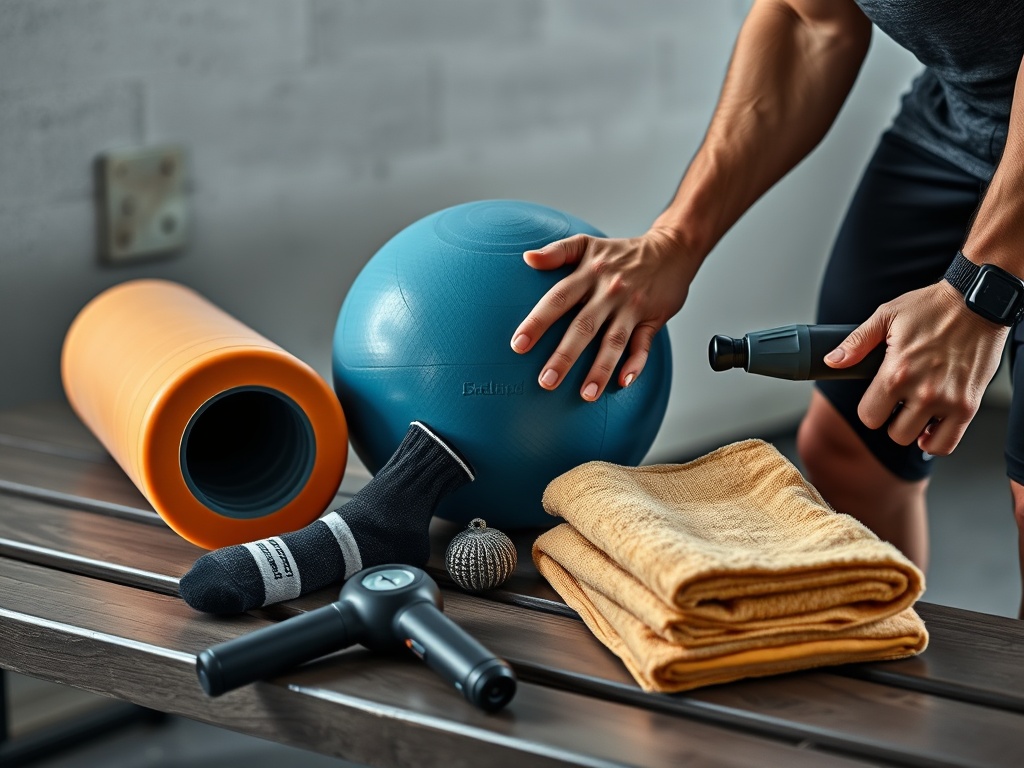
Compression socks, sleeves, and tights are popular after running and lifting. The research is mixed depending on the outcome. Some meta-analyses report small benefits for perceived recovery or certain performance measures, while others find little or no effect on strength recovery. This is a good example of why a tool can be reasonable without being essential.
If compression feels comfortable after long runs, travel, or high-volume training, it may be worth using. Make sure the garment fits correctly and does not cause numbness, discoloration, or pain. People with circulatory problems should get medical advice before using strong compression.
Cold-water immersion: useful in some situations, not a default after every lift
Cold-water immersion can reduce soreness and may improve some short-term recovery outcomes after strenuous exercise. A 2023 meta-analysis found benefits for soreness compared with several other recovery methods. At the same time, chronic use immediately after resistance training has raised concerns because repeated cold exposure may blunt some strength-training adaptations. The meta-analysis on cold-water immersion and training adaptations supports being selective rather than using cold automatically.
That makes context important. During a tournament, multi-day race, or dense competition period, short-term recovery may take priority. During a hypertrophy or strength-building block, routine immediate cold immersion after every lifting session may be less attractive.
Home ice baths also add practical safety issues: very cold water can create a strong cardiovascular response, and people with certain heart, blood pressure, or circulation conditions should not assume it is safe. Never use extreme cold as a test of toughness.
Recovery tool comparison
| Tool | Most realistic use | Evidence confidence | Main caution |
|---|---|---|---|
| Foam roller | Short-term mobility and soreness relief | Moderate for range of motion; mixed for recovery | Excessive pressure on injured or sensitive areas |
| Massage ball | Targeted pressure and comfort | Indirect/moderate | Easy to overdo concentrated pressure |
| Massage gun | Short-term mobility, comfort, convenience | Emerging and mixed | Avoid bones, acute injury, altered sensation |
| Compression | Perceived recovery and comfort | Mixed by outcome | Fit, circulation issues, numbness/pain |
| Cold immersion | Acute soreness/recovery in dense schedules | Moderate for some short-term outcomes | Possible trade-off with strength adaptation; cold risk |
| Heat | Relaxation and perceived stiffness | Variable | Burns, dehydration, contraindications |
The most common buying mistakes
The first mistake is purchasing an expensive device before changing the training error that created the problem. If every long run is too hard or every lifting session ends at failure, no roller can make the program well-balanced.
Finally, avoid devices as a reason to ignore the training plan itself. If you are coming back from time away, restarting cardio after illness, injury, or inactivity can help you rebuild load gradually. If the bigger problem is getting the routine started consistently, motivation strategies for different social styles may be more useful than another recovery purchase.
Use recovery tools as accessories, not substitutes
If you want one purchase, start with the cheapest tool that solves the actual problem. A foam roller or massage ball is enough for many people. Add a massage gun or compression only if convenience or comfort justifies the cost. Use cold strategically rather than reflexively, and treat heat as relaxation unless you have a specific evidence-based reason for it.
Track whether the tool changes something you care about: soreness, range of motion, readiness for the next session, or sleep. If it does not help after a fair trial, stop using it. The most effective recovery setup is the one that supports good training decisions rather than convincing you that you can recover from unlimited load.